How Online Prescription Verification Works (Step-by-Step)
Google Preferred Source
Follow Premier Dream to see verified medications, guides, and pricing in your Google Search & AI results.
Learn how online pharmacy prescription verification works, from e-prescribing (EPCS) and doctor transfers to pharmacist safety checks and refill rules.
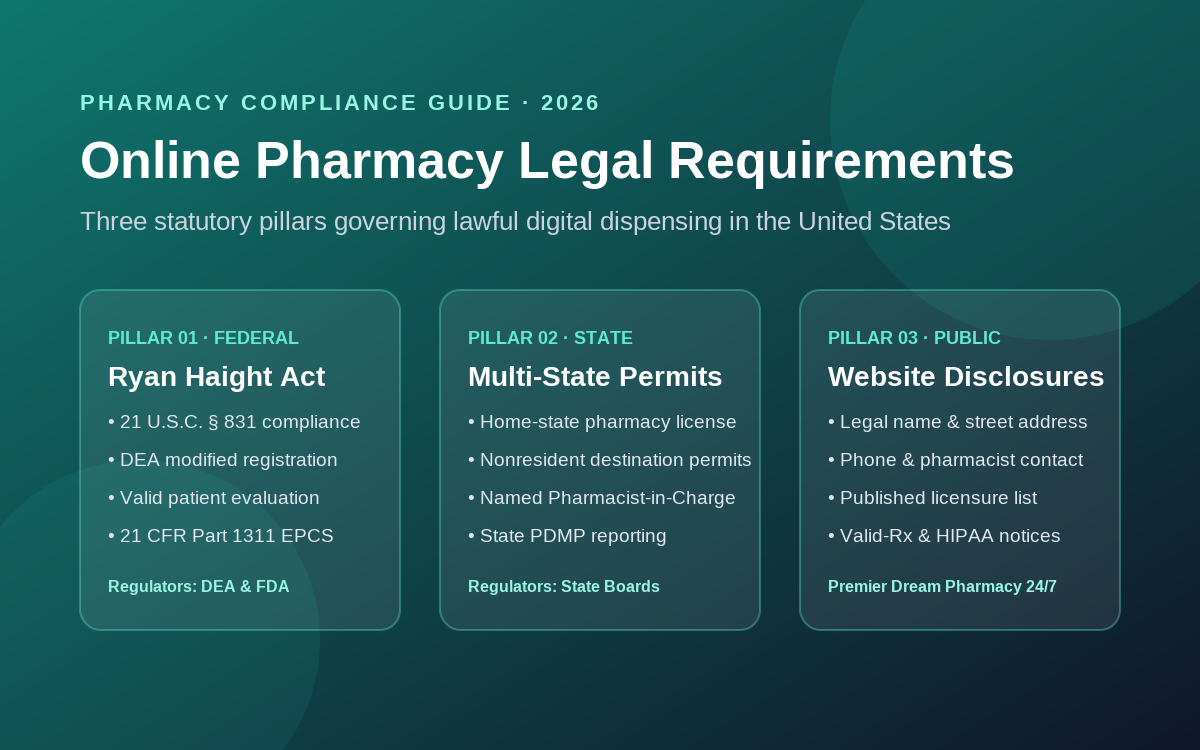
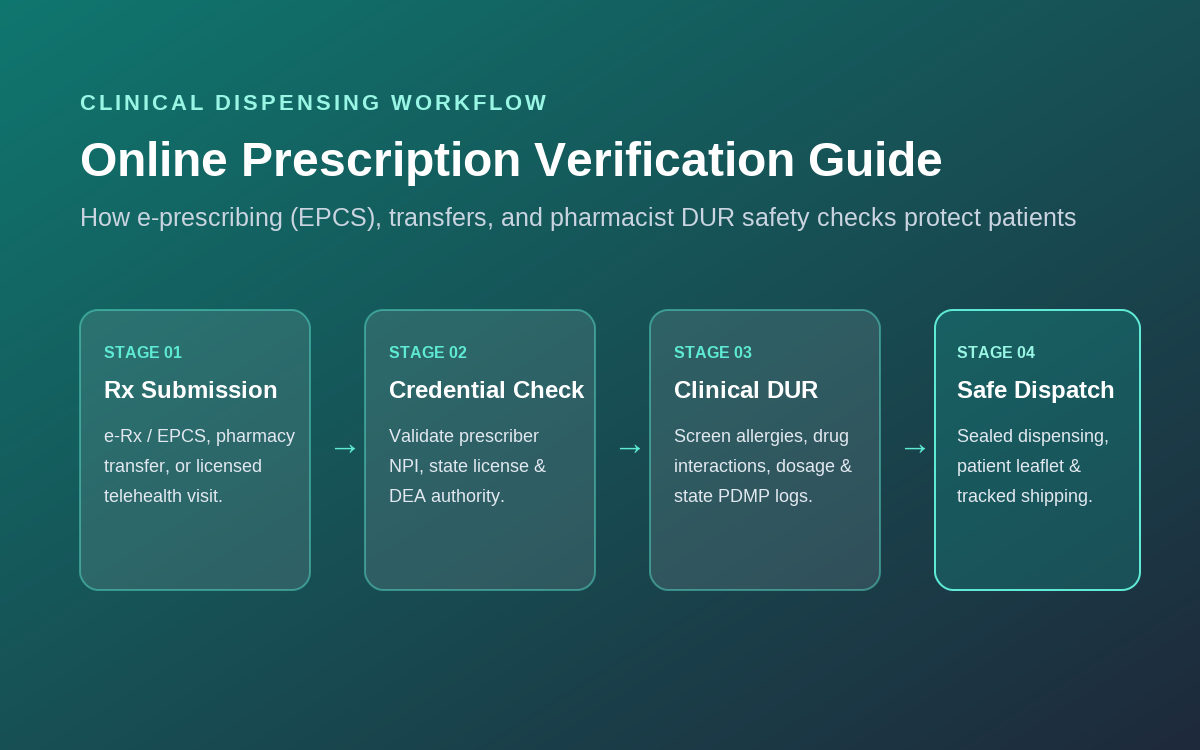
Online pharmacy prescription verification follows three legal submission pathways: a direct electronic prescription (e-Rx or EPCS) sent from your doctor’s EHR system, a pharmacist-to-pharmacist transfer from your current local pharmacy, or an electronic order issued after a compliant telehealth evaluation with a licensed clinician. Before any medication ships, a licensed pharmacist validates the prescriber’s credentials and runs clinical safety checks—a cornerstone of how to buy prescription drugs online legally.
Many first-time buyers wonder why an online pharmacy cannot simply ship a prescription after receiving a smartphone photo of a paper script. Understanding what happens behind the pharmacy counter explains why verification takes a few hours and how you can avoid unnecessary refill delays.
3 Legal Ways to Submit a Prescription Online
1. Direct Electronic Prescription (e-Rx / EPCS) From Your Doctor
Electronic prescribing is the fastest, least error-prone pathway. Your doctor selects the online pharmacy inside their electronic health record (EHR) software and transmits the prescription over an encrypted clinical network (such as Surescripts). For Schedule II–V controlled substances, federal DEA 21 CFR Part 1311 rules require Electronic Prescriptions for Controlled Substances (EPCS) with clinician identity proofing and two-factor authentication.
2. Transferring an Existing Prescription From a Local Pharmacy
If you already have refills remaining at a retail chain or neighborhood pharmacy, you can authorize an online pharmacy to request a transfer on your behalf. Provide your current pharmacy’s name, phone number, prescription (Rx) number, and medication name. A licensed pharmacist contacts the originating pharmacy directly to transfer the remaining fills and close out the old record so duplicate dispensing cannot occur.
3. Telehealth Consultation With a Licensed Prescriber
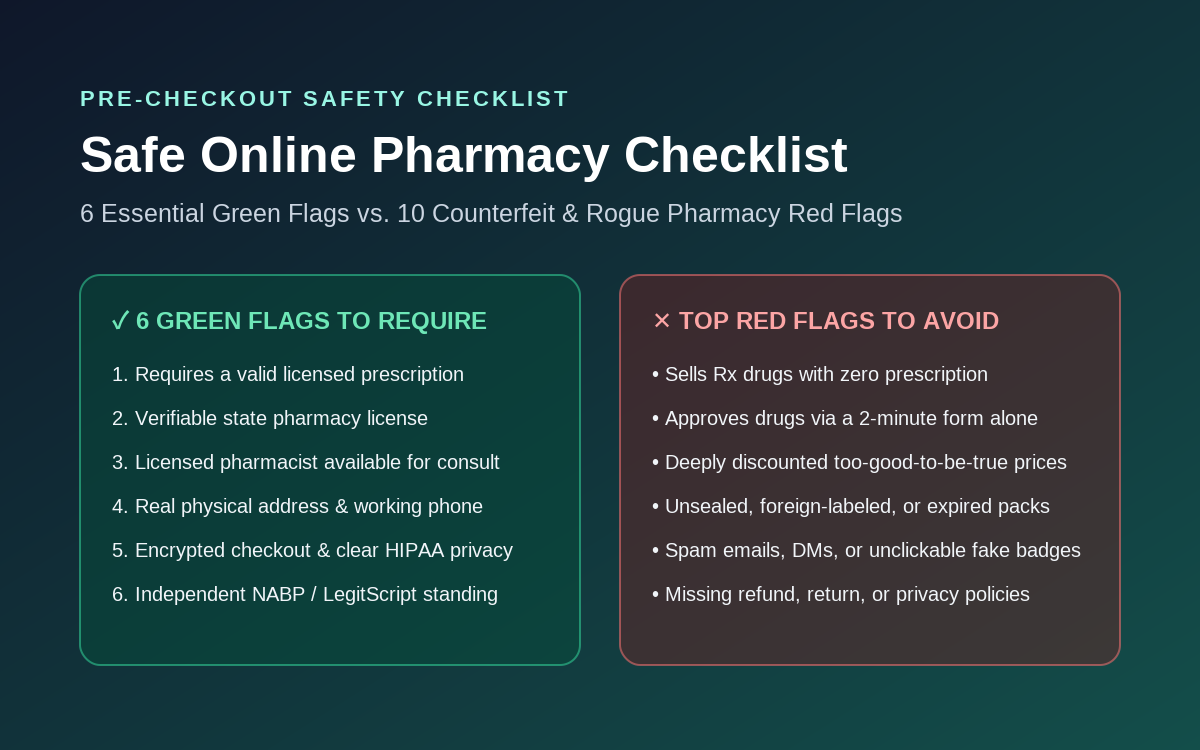
Some integrated digital clinics connect patients with a physician, nurse practitioner, or physician assistant licensed in the patient’s state. After reviewing your health profile, allergies, and medical history—and conducting a synchronous video or audio consult where required by state law—the clinician sends an electronic prescription to the pharmacy if clinically appropriate. Be cautious of sites that issue instant approvals without real clinician review; see our safe online pharmacy checklist for warning signs.
What Happens During Pharmacist Clinical Verification
Receiving a prescription is only step one. Before any bottle or blister pack is labeled and dispatched, a licensed pharmacist completes three mandatory verification stages:
Prescriber Credential & DEA/NPI Validation
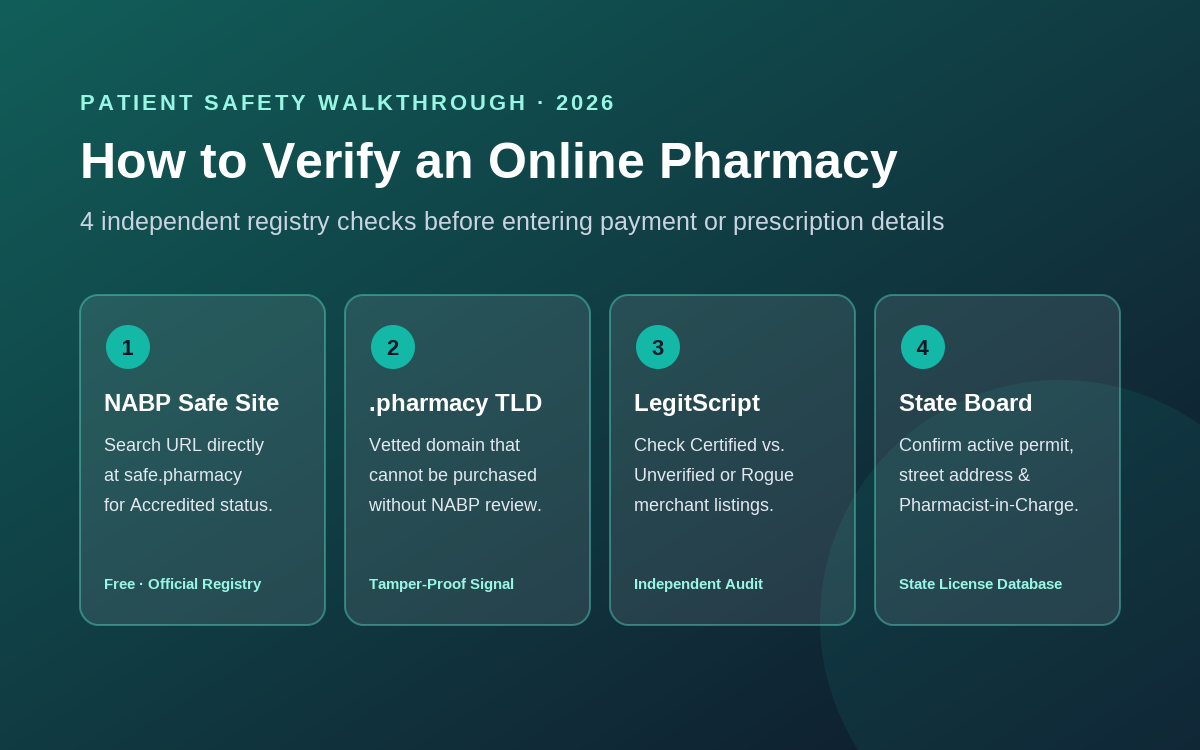
The dispensing pharmacist verifies the prescriber’s National Provider Identifier (NPI), active state medical license, scope of practice, and—for controlled substances—valid DEA registration number. If any detail looks altered or inconsistent, the pharmacist contacts the prescriber’s office directly. Patients should apply similar diligence when checking the pharmacy itself using our guide on how to verify online pharmacy credentials.
Drug-Interaction, Allergy & Dosage Safety Checks (DUR)
Every state requires a prospective Drug Utilization Review (DUR). The pharmacist evaluates the prescribed strength, frequency, and duration against your age, allergies, medical conditions, and active medication list to catch duplicate therapy, dangerous drug–drug interactions, or dosage typos. Remember that web articles never replace individualized clinical review—always consult our online pharmacy medical disclaimer and your prescriber before modifying therapy.
Prescription Drug Monitoring Program (PDMP) Screening
When verifying controlled substances, pharmacists query state Prescription Drug Monitoring Program (PDMP) databases to review recent dispensing history, prevent dangerous overlapping sedative or opioid combinations, and ensure compliance with state quantity limits.
Controlled vs. Non-Controlled Prescription Verification Rules
| Prescription Category | Electronic Submission | Pharmacy-to-Pharmacy Transfer | Refill Rules |
|---|---|---|---|
| Non-Controlled Legend Drugs (e.g., antibiotics, diabetes, blood pressure) |
Standard e-Rx, fax, phone, or verified mail-in hard copy | Permitted for remaining refills (subject to state law) | Up to prescriber authorization (typically valid 12 months) |
| Controlled Schedules III–V | EPCS with 2FA (21 CFR Part 1311) or state-compliant order | Allowed once for refills (or electronic transfer under DEA 2023 rule for unfilled e-Rx) | Max 5 refills within 6 months of issue date |
| Controlled Schedule II | EPCS with 2FA required in most states | One-time electronic transfer allowed for initial unfilled EPCS between compliant pharmacies (DEA 2023 rule); no refills | Zero refills; new prescription required for each fill |
Typical Verification Timelines & Common Reasons for Delay
- Direct e-Rx from your doctor: Usually verified within 2 to 24 business hours.
- Pharmacy-to-pharmacy transfer: Typically takes 1 to 3 business days, depending on how quickly the previous pharmacy responds.
- Common hold-ups: Expired prescriptions, zero refills left, incomplete patient date of birth or allergy history, prescriber callback delays, or missing dosage clarification.
- How to speed up approval: Ask your doctor to send the e-Rx directly, double-check that your legal name and date of birth match your medical record, and respond promptly to any pharmacist outreach.
Prescription Verification FAQs
Can I just upload a photo of a paper prescription?
A photo upload can help pharmacy staff begin intake or contact your doctor’s office, but a photo alone is generally not legally sufficient to dispense a prescription. The pharmacy must receive an authentic electronic prescription, a verified pharmacist transfer, or the original signed hard-copy prescription by mail where permitted.
How long does a prescription transfer take?
Most standard non-controlled transfers complete within 1 to 3 business days. Weekends, holidays, or busy retail pharmacy queues can occasionally add an extra business day.
Can controlled-substance prescriptions be transferred to an online pharmacy?
Under the DEA’s 2023 electronic transfer rule, an initial unfilled electronic controlled-substance prescription (including Schedule II) may be transferred electronically once between compliant pharmacies at the patient’s request, provided both pharmacies’ software supports the standard. Refills for Schedule III–V prescriptions may also be transferred subject to federal and state limits.
What if my prescription has no refills left?
The online pharmacy can send an electronic refill renewal request to your prescriber’s office, or you can message your clinician directly through your patient portal to issue a fresh e-Rx.
To see how prescription verification fits alongside state licensing and patient privacy protections, continue with our pillar guide on how to buy prescription drugs online legally and our explainer on HIPAA compliance for online pharmacies.
Dr. Sarah Lane
PharmD, Licensed Pharmacist